does-window-film-reduce-heat
Does window film reduce heat? See how the right tint can cut glare, block UV and make Gold Coast and Brisbane homes and offices more comfortable all year.
Oct 17, 2026
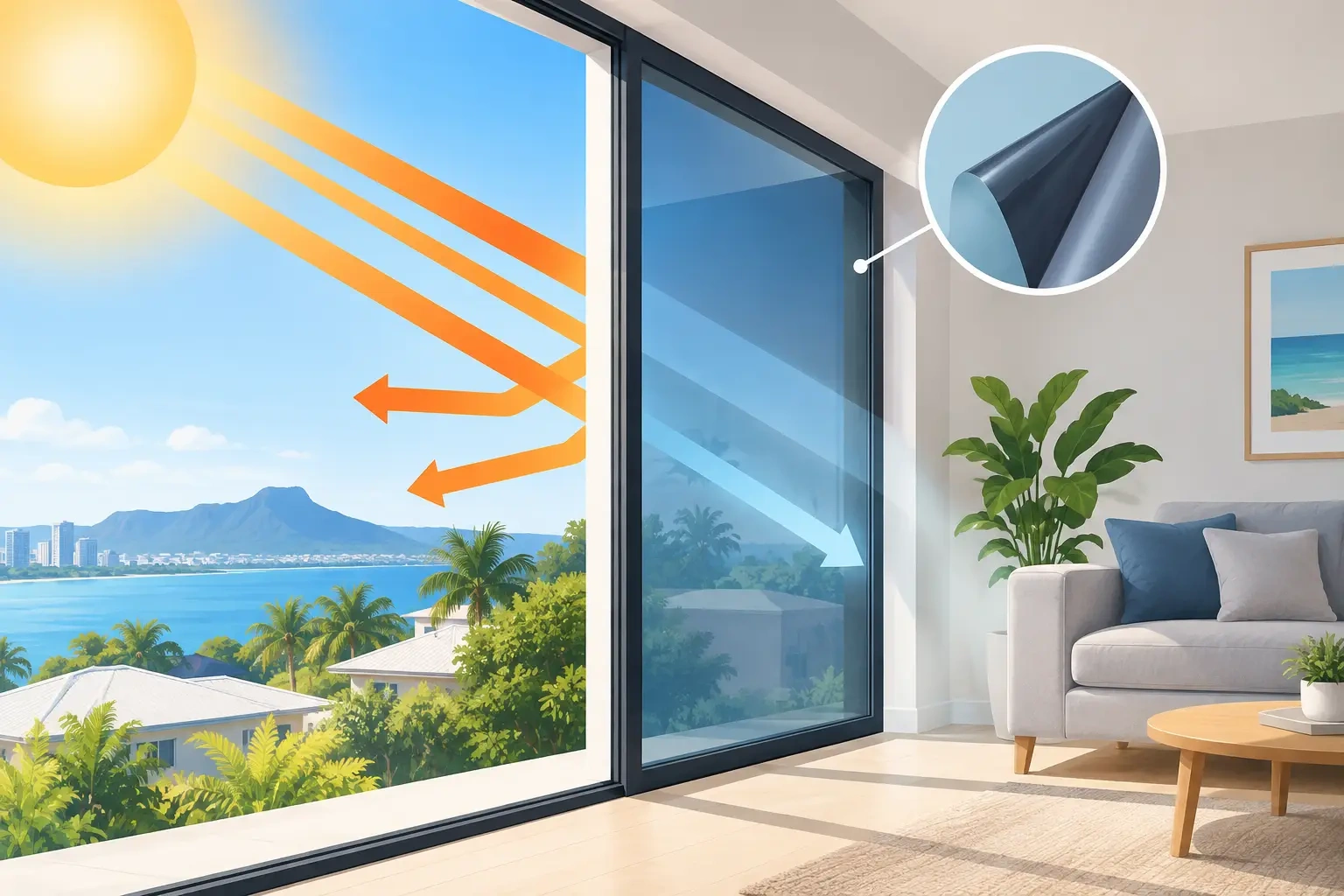
# Does Window Film Reduce Heat in Queensland Homes? A west-facing living room can feel completely different by mid-afternoon. The air conditioner is working hard, the sofa is hot to sit on and the television screen disappears behind glare. So, does window film reduce heat? Yes - when the film is selected properly for the glass, aspect and room, it can make a noticeable difference to comfort without replacing your existing windows. For Gold Coast and Brisbane properties, window film is a practical way to manage strong sun through large areas of glass. I have personally installed window tinting since 1993, and the right result is not simply about choosing the darkest film. It is about reducing the part of the sun that causes heat and glare while keeping the daylight, appearance and privacy level that suits the property. ## How window film reduces heat Sunlight passing through glass brings more than visible light into a room. It also carries infrared energy, which is experienced as heat, and ultraviolet rays, which contribute to fading and deterioration of furnishings. Once that energy enters through the window, it is absorbed by floors, walls, furniture and other surfaces. The room then holds onto that warmth. Solar-control window film is designed to reject, absorb or reflect a portion of that solar energy before it has the chance to build up inside. Different films do this in different ways. Some have a subtle neutral appearance, some are more reflective, and some are designed to remain quite clear while improving heat rejection. Depending on the film and the glass it is applied to, window tint can [reduce solar heat](https://www.tradetint.com.au/how-to-reduce-window-heat) by up to 79%. That is a maximum performance figure, not a promise for every window. A shaded south-facing bedroom will not have the same result as an unprotected western wall of glass that receives harsh afternoon sun. Still, on problem windows, the improvement can be immediate and easy to feel. ## Does window film reduce heat enough to ease air conditioner use? In many homes and workplaces, yes. Window film reduces the amount of solar heat entering through the glass, so the air conditioner does not have to fight the same level of heat gain. The result may be a room that cools faster, stays more even in temperature or feels more usable before the air conditioning is switched on. It is not insulation in the same sense as ceiling insulation, nor will it fix heat coming through an uninsulated roof, open doors or poorly sealed windows. Think of it as addressing one major source of heat load: direct sun through glazing. In a Queensland home with broad glass doors, high windows or a sun-drenched office frontage, that source can be substantial. The biggest gains are usually seen in rooms with afternoon exposure, conservatory-style spaces, upstairs rooms and offices where staff sit close to windows. For commercial properties, reducing heat and glare at workstations can also make a real difference to screen visibility and day-to-day comfort. ## Darker film is not always cooler It is understandable to assume a dark tint will deliver the best heat reduction. Sometimes it will, but darkness alone is not the measure that matters. Modern solar films can offer strong heat rejection in lighter, more natural-looking finishes. This is often the better option where homeowners want to keep bright rooms bright or where a business wants a clean shopfront appearance. A darker film reduces more visible light, which can help with glare and daytime privacy. However, it can change the look of the glass and make a room feel dimmer, particularly on overcast days. Reflective films can be highly effective for exposed windows but may alter external appearance and provide less privacy at night when interior lights are on. The best choice comes down to what you need most. If heat is the main issue, I look at the window direction, glass type and how much sun the room receives. If glare, fading or privacy are also concerns, that helps narrow down a film that handles several problems rather than solving one and creating another. ## Heat, glare and UV are related but different problems A room can be hot without much screen glare, and a room can have annoying glare without feeling especially hot. It helps to separate the issues when choosing film. Heat reduction is about managing solar energy. Glare reduction is about controlling excessive visible light, which is particularly useful in television rooms, home offices, reception areas and workplaces with computer screens. Quality window film can [reduce glare](https://www.tradetint.com.au/blog/how-to-stop-screen-glare-in-your-home-or-office) by up to 93%, depending on the product selected. UV protection is another important benefit. Most quality architectural films block up to 99% of [ultraviolet rays](https://www.tradetint.com.au/uv-film-for-fading-furniture). That helps protect timber floors, carpet, artwork, curtains, upholstery and merchandise from fading. It will not stop all fading, because visible light and heat also play a part, but it can significantly slow the damage caused by constant sun exposure. For many clients, the ideal film is one that takes the edge off the heat, makes screens easier to see and helps protect interior finishes, all while retaining a comfortable amount of natural light. ## The glass itself matters Not every film is suitable for every type of glass. This is where a proper assessment matters more than picking a roll of tint based on colour alone. Older single-pane glass, standard clear glass, double glazing, toughened glass and certain coated or laminated products all behave differently in the sun. Applying an unsuitable film can increase thermal stress in some situations, particularly where the glass is partly shaded, has existing edge damage or is installed in a high-heat location. Before recommending a product, I consider the glass construction, its condition, the frame, the orientation and any shade from eaves, trees or neighbouring buildings. I also ask how the room is used. A film that suits a glass sliding door in a lounge may not be the right fit for a shopfront, bathroom window or office boardroom. This is also why very cheap DIY film is not always a bargain. Apart from the challenge of getting a clean, long-lasting finish, it may not have the stated performance, adhesive quality or compatibility needed for architectural glass. A professional installation is as much about selecting the right film as applying it neatly. ## Where window tinting makes the biggest difference Large exposed windows are the obvious place to start, but the worst heat problems are not always where people expect. Often, it is a single pane near a desk, a high stairwell window or a glass door that receives low afternoon sun. That sun can travel deep into the room and heat the surfaces inside. For homeowners, west and north-west facing windows are common trouble spots in South-East Queensland. For landlords and property managers, film can be a sensible improvement when replacing windows is not practical or within budget. It can improve comfort for tenants without the cost and disruption of major glazing work. In offices, the benefit often extends beyond temperature. Staff who constantly close blinds to see their monitors lose natural light and external views. The right film can reduce glare enough to keep blinds open more often, while still easing solar heat through the glass. ## What window film will not do Good advice includes being clear about limits. Window film will not turn an unshaded glass room into a cool retreat on a 35-degree day without help from ventilation or air conditioning. It will not provide night-time privacy unless paired with another solution, because the brighter side of the glass is easier to see through. It also cannot repair failed seals, cracked glass or leaking window frames. If a window has a structural issue, that should be dealt with first. And if the main source of heat is a metal roof or direct sun on an uninsulated wall, film should be one part of a broader approach. But where solar gain through glass is the issue, it is one of the least disruptive upgrades available. There is no need to remove windows, rebuild frames or live through a major renovation. ## A practical way to choose the right film Start by identifying when the room becomes uncomfortable. Morning sun, afternoon sun and all-day exposure can call for different solutions. Take note of whether the main complaint is heat, glare, fading, privacy or a mix of all four. Photos and accurate glass measurements are useful for an initial price, but a tailored recommendation is worth more than a quick guess based on window size alone. At Trade Tint, I personally quote and install each job, from one difficult window through to larger commercial glazing programs. That means the person assessing the problem is also accountable for the finished result. If you are comparing options, ask about heat rejection, glare reduction, visible light transmission, UV protection, appearance from inside and outside, and suitability for your particular glass. Those details are far more useful than choosing a film simply because it is labelled dark or reflective. A well-chosen window film will not change the Queensland climate outside, but it can make the rooms behind your glass far more comfortable to live and work in.