solar-window-film-practical-guide-qld-homes
Solar window film reduces heat, glare and UV in Gold Coast and Brisbane properties. Learn how to choose the right finish for comfort, privacy and value today.
Oct 4, 2026
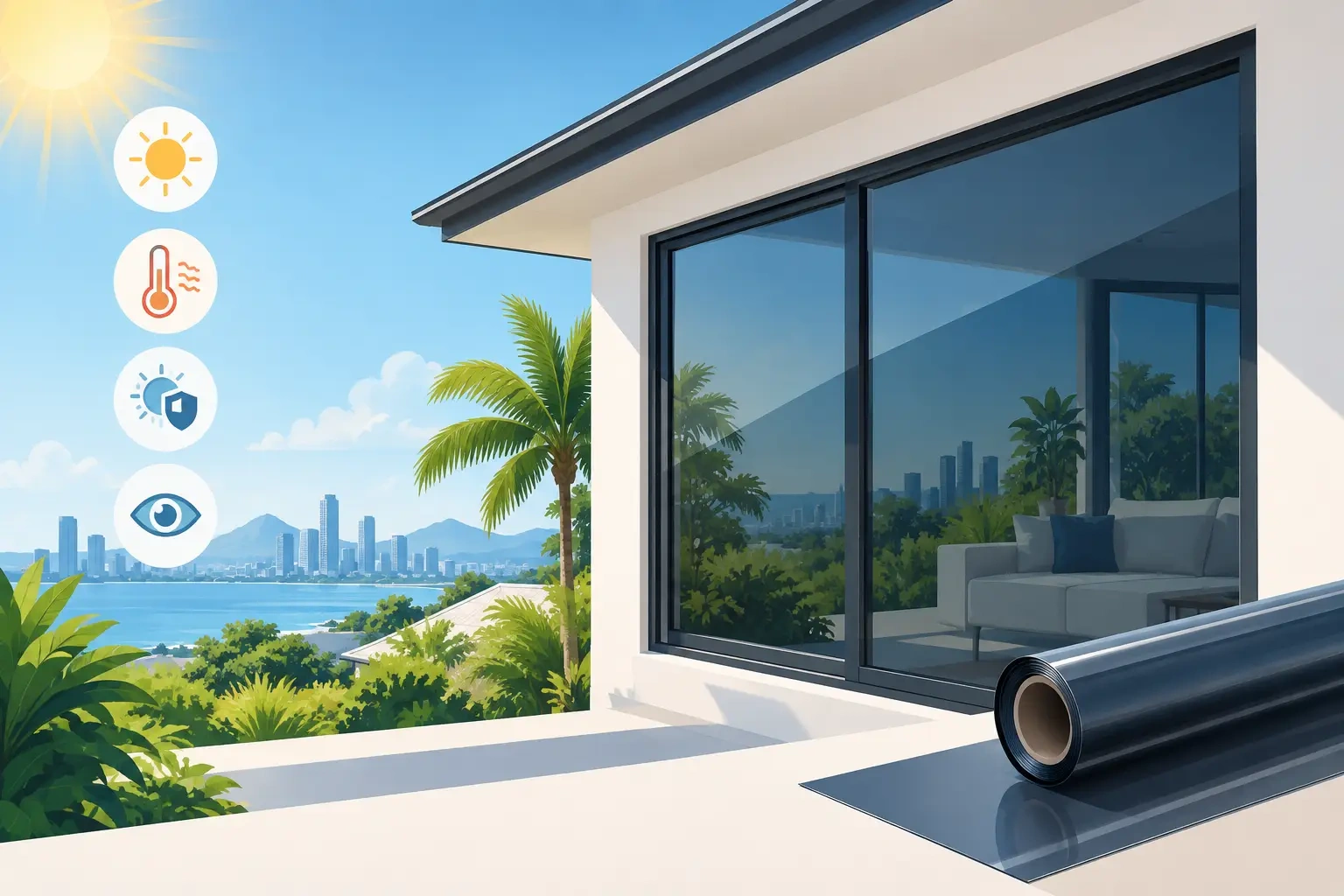
# Solar Window Film: A Practical Guide for QLD Homes A west-facing lounge can look perfect at 8am and become the hottest room in the house by lunchtime. On the Gold Coast and in Brisbane, that harsh sun also creates screen glare, [fades furnishings](https://www.tradetint.com.au/uv-film-for-fading-furniture) and makes some rooms feel hard to use for much of the day. Solar window film is a practical way to improve the glass you already have, without the cost and disruption of replacing windows. I have installed window tinting since 1993, and the first question I ask is not, “What is the darkest film?” It is, “What is happening in the room?” The right answer may be a light, near-clear solar film, a reflective finish, or a privacy film with solar control. Each window, aspect and property has different priorities. ## What solar window film does Solar window film is a professionally applied layer fitted to the inside surface of existing glass. It is designed to reduce the amount of solar energy, glare and ultraviolet light passing through the window while preserving the view and natural light as much as possible. The effect is noticeable where it matters most: lounges with large glass doors, bedrooms that cop afternoon sun, home offices with glare across a monitor, shopfronts, meeting rooms and open-plan workplaces. Depending on the film and glass combination, solar films can reduce heat by up to 79% and glare by up to 93%. They can also block up to 99% of UV radiation, helping protect flooring, curtains, furniture, artwork and stock near windows. Those figures are not a promise that every room will suddenly feel air-conditioned. Heat performance depends on the glass, window size, direction, shading, roof insulation and how much sun reaches the pane. But for many properties, film takes the sharp edge off direct sunlight and makes rooms more comfortable at the times they are normally avoided. ## Choosing solar window film for your property The best film is not always the darkest one. Dark tint can be effective for glare and daytime privacy, but it also changes the look from inside and outside, and it reduces visible light. A lighter film may be better for a kitchen, living area or office where you want to retain a bright, open feel. ### Start with the problem, not the shade If heat is the main issue, I look at the window aspect and the amount of direct sun hitting the glass. West and north-west facing windows often receive the toughest afternoon load, particularly on upper floors and homes with wide sliding doors. A high-performance neutral or reflective solar film can reduce heat while keeping the room usable and the glass appearance relatively subtle. If [glare is the main issue](https://www.tradetint.com.au/blog/how-to-stop-screen-glare-in-your-home-or-office), darker or more reflective options may suit. This is common in media rooms, home offices, reception areas and retail spaces where sunlight washes out screens or makes it uncomfortable to sit near a window. Glare reduction can make a room more functional even when the temperature is not the biggest concern. For fading, a clear or lightly tinted UV-control option can make sense where preserving the appearance of the glass is important. UV is a major cause of fading, although it is not the only one. Visible light and heat also contribute, so a solar-control film generally offers better overall protection than a UV-only approach. ### Consider daytime and night-time privacy separately Reflective solar films can provide excellent daytime privacy. During daylight hours, the brighter side of the glass is harder to see through, so people outside have less visibility into the room. This suits street-facing windows, apartments, offices and shopfronts. At night, the effect reverses when lights are on inside. If privacy is your priority after dark, curtains, blinds or a frosted film may be needed as well. Frosted film provides consistent privacy but does not offer a clear view out, while solar film generally keeps the view. The right choice comes down to whether heat, outlook, privacy or light is the non-negotiable factor. ### Match the film to the glass Not every film belongs on every window. Modern glazing can include toughened glass, double glazing, laminated glass and low-E coatings, and each has different heat-absorption characteristics. Applying an unsuitable film can increase thermal stress in some situations. That is why a proper recommendation starts with identifying the existing glass, not simply choosing a sample from a brochure. I assess the window and explain the practical trade-offs before quoting. It is a small step that helps avoid a film that looks right but is not suitable for the glass or the result you want. ## Where solar film makes the biggest difference Large areas of exposed glass are usually the obvious starting point, but the most valuable windows are not always the biggest. A single bedroom window that receives direct late-afternoon sun can affect sleep and make the whole room uncomfortable. A small office window can create enough glare to turn a desk into wasted space. In homes, solar film is often installed on living-room windows, sliding doors, rumpus rooms, bedrooms and home offices. It is particularly useful during renovations where the glass is in good condition but the house needs better comfort and energy performance without a full window replacement. For commercial properties, it can assist with staff comfort, screen visibility and more consistent working conditions near glazing. Offices with sunny boardrooms, retail premises with fading display stock, medical practices seeking privacy, and properties with exposed shopfront glass all have different needs. Solar film can also improve the outside appearance of a building by creating a more uniform finish across older glazing. For landlords and property managers, film can be a sensible upgrade between tenancies. It improves comfort without the cost of replacing windows, and it can help present an apartment, office or shopfront more favourably. The key is selecting a finish that is durable, appropriate for the building and acceptable under any strata or lease requirements. ## What installation involves Professional installation is clean, efficient and usually far less disruptive than people expect. The glass is thoroughly cleaned, the film is precision-cut and applied with a specialised solution, then carefully finished around the edges. It is normal to see some moisture haze or small water pockets during the drying period. These generally clear as the film cures. Drying times vary with weather, film type and glass conditions. Queensland warmth can help, but shaded windows and humid periods may take longer. During curing, avoid cleaning the film and do not use abrasive pads, blades or harsh chemicals once it has dried. For most residential jobs, access is straightforward and rooms can remain in normal use. On commercial projects, I can work around trading hours, staff areas and staged installation requirements where practical. Whether it is one troublesome pane or a larger glazing programme, I personally quote and install the work, so the person assessing the job is the person completing it. ## Solar film versus blinds, awnings and replacement glass Solar window film is not the only answer to heat and glare. External awnings and shutters can be very effective because they stop sun before it reaches the glass. Landscaping and shade structures can also make a real difference. However, these options may not suit every façade, budget, strata rule or window location. Internal blinds help with privacy and light control, but heat has already passed through the glass by the time it reaches them. They are still useful alongside film, especially for night-time privacy. Window replacement can offer excellent long-term performance, particularly when renovating extensively, but it is usually a much larger investment. Film sits in a practical middle ground. It [improves the performance](https://www.tradetint.com.au/blog/energy-saving-film-for-windows) of existing windows, retains the glass and can often be installed quickly. For a home with sound windows but uncomfortable sun exposure, that can be the most sensible first step. ## A better quote starts with accurate details For a straightforward estimate, measured glass sizes, a few photos and the property suburb are often enough to get started. It also helps to mention which direction the windows face, what time of day the problem is worst, and whether you are most concerned about heat, glare, fading or privacy. A clear quote should identify the film type, the areas being treated and the expected result, rather than relying on vague terms such as “premium tint”. You should know whether the film is intended mainly for solar control, privacy, safety or decoration, because those products perform differently. If you are weighing up solar window film, focus on the room you avoid using when the sun is at its strongest. Improving that one window may make more difference to daily comfort than changing every pane in the property.